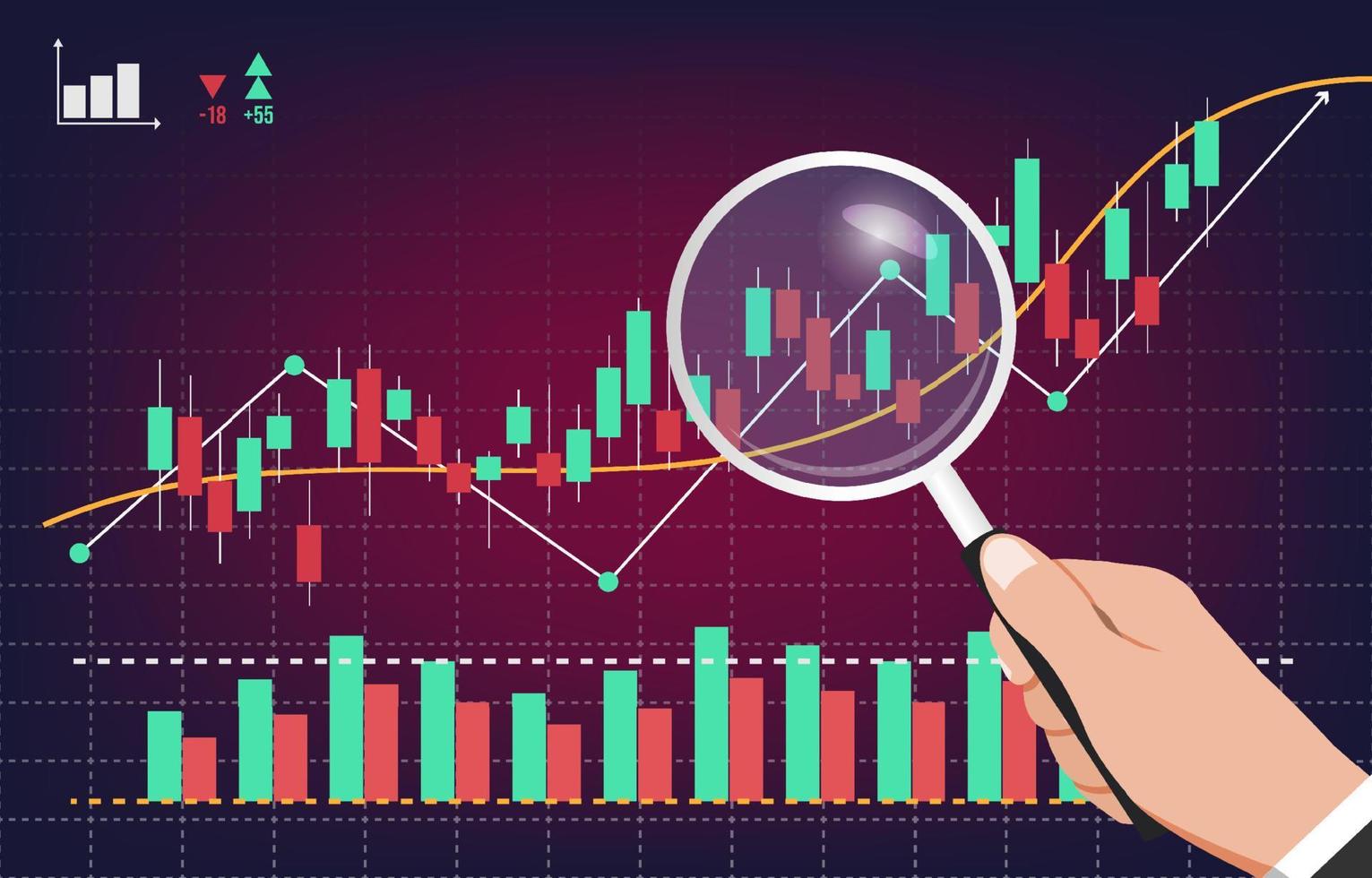
Decoding Earnings: The Hidden Signals in Corporate Reports
Earnings reports are crucial disclosures that offer insights into a company's financial health. These documents go beyond mere figures, revealing narratives that can inform smarter investment choices. Understanding how to interpret these reports provides a clearer view of potential market directions and helps prevent costly mistakes.
Beyond the Headlines: Revenue and Earnings Surprises
Every earnings season, analysts set expectations on key metrics like revenue and earnings per share. A company that exceeds these expectations often signals robust internal management or an unexpectedly strong market position. Such "earnings beats" enhance investor confidence and can indicate effective strategies or favorable external conditions, fostering a reliable brand image.
Moreover, consistently beating forecasts builds a track record of excellence. It assures investors of the business’s sustainable power to outperform, suggesting future growth and stability. Detecting these signals in earnings reports can help investors distinguish between transient successes and long-term growth potential.
The Crystal Ball: Guidance and Management Commentary
Company guidance offers a future outlook on projected revenue and earnings. This segment of the earnings report is particularly scrutinized as it reflects management's confidence in future performance. Positive guidance can boost stock prices, while negative projections may trigger declines, regardless of past successes.
Investors pay attention to the tone of management's commentary, which can convey levels of confidence or caution. The guidance often factors in anticipated market trends, potential challenges, and industry conditions, offering a deeper understanding of the company's strategic position. This forward-thinking perspective assists investors in aligning their strategies with anticipated market movements.
The Detective Work: Digging into Operational Metrics
Understanding a company's operational health requires analyzing metrics like profit margins, inventory levels, and segment performance. These provide context to revenue figures and help gauge efficiency, pricing power, and potential vulnerabilities. For instance, narrowing profit margins might indicate rising costs or increasing competitive pressure, which can be a red flag for the company's financial health.
By examining different business segments, investors can discern whether growth is driven by sustainable core business operations or less reliable, temporary factors. This analysis helps differentiate between superficial and sustainable growth, leading to more informed investment decisions.
Reading the Waves: How Market Indexes Reflect Economic Health
Stock market indexes serve as economic barometers, encapsulating wide-ranging data into a digestible form. They provide a snapshot of market performance, revealing investor sentiment and economic trends.
The Engine Room: Corporate Earnings and Consumer Spending
Indexes often rise when corporate profitability increases and consumer spending remains robust. This relationship underscores the crucial role of consumer confidence in economic stability. Healthy corporate earnings reflect increased consumer spending, driving market optimism and investment.
During earnings season, positive reports can buoy indexes by showcasing widespread confidence in corporate health. As a significant portion of economic activity stems from consumer behavior, indexes serve as mirrors of household economic confidence and purchasing power.
Taking the Pulse: The Labor Market's Subtle Signals
The strength of the labor market directly influences consumer behavior and, consequently, market indexes. High employment levels support consumer spending, providing a stable economic base. Subtle changes in employment data can suggest shifts in economic health and influence market movements.
Market reactions to employment data underscore the tight link between labor market conditions and economic confidence. While apparent weaknesses can cause concern, stable employment levels indicate resilience, fostering investor confidence and market stability.
The Human Element: Investor Sentiment and Broader Forces
Investor sentiment plays a significant role in market index movements, as emotional reactions can amplify or dampen the effects of economic data. Policy changes, geopolitical developments, and economic forecasts all contribute to investor mood, impacting index fluctuations.
Decisions such as interest rate adjustments by central banks can significantly influence investor behavior. The anticipation of policy shifts often yields volatility, and investor sentiment reflects not only the current economic environment but also expectations for the future.
Technical Indicators: Navigating the Trader's Toolkit
Technical indicators offer insights into market behavior by analyzing past data trends to predict future movements. These tools focus on price and volume patterns, providing a different perspective from fundamental analysis.
Understanding the Trend with Moving Averages
Moving averages simplify complex price data, revealing underlying trends by smoothing out short-term fluctuations. They help traders discern whether a market is trending upwards, downwards, or stagnating.
Common strategies involve analyzing moving average crossovers to identify potential entry or exit points. For example, when a short-term moving average crosses above a longer-term one, it might signal an upward trend, attracting trader interest.
Gauging Momentum with the Relative Strength Index (RSI)
The RSI measures momentum by indicating whether assets are overbought or oversold. Oscillating between 0 and 100, it helps traders assess the intensity of price movements.
High RSI readings suggest overbuying, possibly predicting a future price correction, while low readings indicate overselling, signaling potential recovery. Divergences between price movements and RSI trends can also highlight impending reversals, offering strategic trading opportunities.
Identifying Key Levels with Support and Resistance
Support and resistance levels act as psychological markers where market trends may pause or reverse. These levels stem from historical price behavior, playing a crucial role in trading strategies.
Traders use these levels to set entry and exit points, buying near support and selling near resistance. Understanding these dynamics aids in predicting market behavior, as breaches of these levels often signify strength or weakness.
The Role of Volatility: Friend or Foe in Investment?
Market volatility, often perceived as a threat, also represents opportunity. Understanding its causes helps investors leverage volatility to their advantage, transforming risk into potential gain.
Understanding Volatility's Dual Nature
Volatility reflects market uncertainty, which arises from new economic data or unexpected global events. While it can signify risk, it also provides buying opportunities for long-term investors at reduced prices.
High volatility periods challenge investors to remain disciplined. Recognizing volatility's role in market evolution allows investors to strategize effectively, balancing potential losses with opportunities for substantial gains.
How Economic Signals Drive Market Swings
Economic indicators such as employment data, consumer spending, and central bank policies strongly impact market dynamics. Their release often results in heightened volatility as investors reassess positions based on new information.
Monetary policy shifts, particularly interest rate changes, are pivotal in driving market swings. By understanding these connections, investors gain insight into market reactions to economic developments, enabling informed decision-making.
Investor Psychology and Market Momentum
Emotions like fear and greed significantly affect investor behavior. While fear can lead to panic selling, greed often results in overinvestment during bullish phases. Understanding these emotions helps investors navigate volatility by maintaining a balanced perspective.
Market momentum, driven by collective sentiment, influences volatility. Recognizing the interplay of investor psychology and market movements empowers investors to manage risk effectively and capitalize on market trends.
Investor Emotions: Understanding the Psychological Drivers Behind Market Moves
The interplay of emotion and finance shapes market behavior profoundly, affecting everything from trading decisions to long-term investment strategies.
The Twin Forces of Fear and Greed
Fear and greed are fundamental emotions that drive market cycles. Greed fuels buying frenzies during market upswings, leading to inflated asset prices and potential bubbles. Conversely, fear triggers panic selling during downturns, exacerbating market declines.
Understanding these forces aids in anticipatory strategy development, helping investors maintain composure and adhere to long-term plans despite market ups and downs. Recognizing emotional triggers fortifies decision-making, turning emotional insights into strategic advantages.
The Hidden Biases in Our Financial Brain
Investors often fall prey to cognitive biases such as loss aversion and confirmation bias. These tendencies can cloud judgment, leading to poor investment choices, such as holding onto losing trades too long or ignoring contradictory evidence.
Acknowledging these biases empowers investors to adopt more objective approaches, fostering disciplined decision-making. By striving for unbiased analysis, investors improve their chances of achieving financial goals, regardless of market complexity.
Building Mental Resilience for Market Success
Developing emotional resilience is key to successful investing. Techniques like self-reflection and pre-defined investment strategies mitigate emotional response risks, providing stability during volatile markets.
Long-term perspectives allow investors to weather short-term fluctuations confidently. By focusing on strategic goals rather than daily market movements, investors achieve sustainable success, maintaining composure amid market chaos.
Q&A
-
What role do earnings reports play in stock market analysis?
Earnings reports are crucial in stock market analysis as they provide investors with a snapshot of a company's financial performance over a specific period. These reports include key financial metrics such as revenue, net income, and earnings per share, which help investors assess a company's profitability and future growth potential. By analyzing earnings reports, investors can make informed decisions about buying, holding, or selling stocks.
-
How do market indexes help investors understand the stock market?
Market indexes, such as the S&P 500 or the Dow Jones Industrial Average, serve as benchmarks for the overall performance of the stock market or specific segments of it. They offer a way to gauge the market's health and trend by tracking a collection of stocks that represent a portion of the market. Investors use these indexes to compare individual stock performance against the broader market and to make strategic decisions based on market trends.
-
What are technical indicators, and how do they assist in trading decisions?
Technical indicators are mathematical calculations based on historical price, volume, or open interest information that traders use to analyze and predict future price movements. Common technical indicators include moving averages, Relative Strength Index (RSI), and Bollinger Bands. These tools help traders identify market trends, momentum, and potential reversal points, aiding in making more informed trading decisions.
-
Why is understanding volatility trends important for investors?
Volatility trends indicate the degree of variation in stock prices over a specific period and are essential for assessing the risk associated with investments. Higher volatility often implies greater risk, but it can also present opportunities for higher returns. Understanding volatility helps investors determine appropriate investment strategies, such as hedging or diversifying portfolios to manage risk effectively.
-
How does trading volume influence investor behavior in the stock market?
Trading volume reflects the number of shares traded in a given period and is an important indicator of market activity and liquidity. High trading volume often signifies strong investor interest and can lead to more significant price movements. Conversely, low volume may indicate a lack of interest or uncertainty among investors. By analyzing trading volume, investors can gauge market sentiment and make more informed decisions about entering or exiting positions.