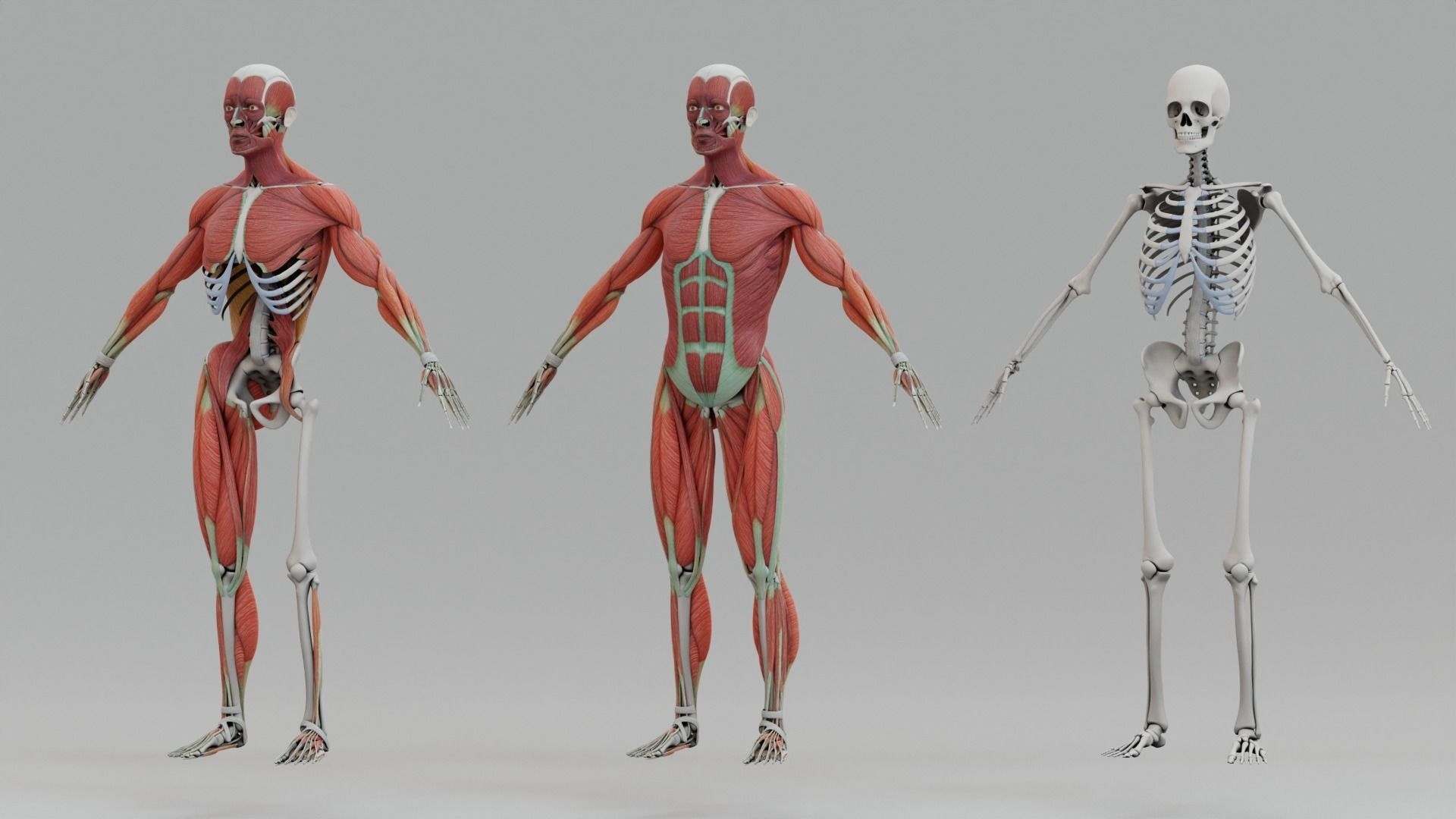
The Framework of Life: Exploring Our Skeletal System
The human body's structure and movement rely heavily on its skeletal system. Often perceived merely as a support mechanism, the skeleton plays multiple roles in maintaining our physical health and enabling dynamic motion.
The Structural Core: Building the Body's Framework
The skeletal system acts as a fundamental framework, similar to the beams of a building, providing the necessary support for human form. Beyond simply holding us upright, it also serves as a protective cage for vital organs. The skull, for instance, securely encases the brain, while the rib cage forms a shield around the heart and lungs. This structure ensures that these organs remain protected from potential damage, providing a level of safety indispensable to survival.
The skeleton's stability is crucial for muscular function. Muscles depend on the skeleton to offer fixed points against which they can contract. This synergy is not only vital for movement but also for maintaining posture and balance. When skeletal issues arise, such as those due to injury or degenerative diseases, the ripple effect can be profound, impacting mobility and general quality of life. Orthopedic interventions often focus on addressing structural problems to restore this essential balance.
The Art of Movement: Joints as the Connectors
Bones alone do not provide the whole picture of the skeleton. Joints, the connections between bones, are central to allowing movement. They combine stability and flexibility, fulfilling the remarkable feat of holding the body steady while enabling free movement. Joints work alongside a complex array of ligaments, tendons, and cartilage, each contributing to this delicate balance.
This system is a marvel of engineering, functioning as an elaborate network of levers and pulleys. Imagine standing still, where your body forms a solid, supportive framework. Now envision walking; your joints dynamically shift to accommodate movement, demonstrating their flexibility. Practices such as physical therapy help optimize joint alignment and efficiency, teaching body awareness that supports joint health over a lifetime.
Adaptation in the Skeleton: A Dynamic Entity
Unlike static fortresses, our bones are living tissue, capable of remarkable adaptation. This adaptability becomes evident during physical demands like childbirth, where the pelvic bones exhibit flexibility. Modern imaging techniques illustrate the pelvis's ability to shift and open, highlighting its capacity for nuanced movement, driven by the need to facilitate birth.
In our daily routines, our skeleton continually adjusts to changes, absorbing shocks and enhancing movement efficiency. It balances constant forces and stresses, adapting to new activities and physical demands. This resilience underscores the skeleton's dynamic role as not only a structural entity but also an actively responsive system inherently capable of growth and change.
The Inner Orchestra: Tissues Crafting the Body's Functions
Delving beyond bones, the human body's functionality hinges on diverse tissue types. These tissues collaborate harmoniously to give rise to the complex operations that define life.
The Shield and Interface: Epithelial Tissue
Epithelial tissue acts as the body's frontline defense, forming both a protective barrier and a functional interface with the environment. This tissue lines organs and cavities, forming layers that protect against physical, chemical, and microbial threats. The skin represents the most visible manifestation of epithelial tissue, warding off damage and fluid loss while maintaining a stable internal environment.
Inside the body, epithelial tissues vary in form and function, enabling absorption in the digestive tract and clearing debris in the respiratory system. Their tight configuration allows them to filter, absorb, and secrete efficiently, making them indispensable for organ function and protection.
The Body's Connective Network: Connective Tissue
Connective tissue is the body's internal "glue," providing structural integrity and support. Its diverse forms range from the rigidity of bone to the flexible nature of cartilage. Ligaments and tendons exemplify connective tissues that enable movement by anchoring muscles to bones or connecting bone to bone, demonstrating their vital role in everyday mobility and stability.
Blood, another form of connective tissue, circulates through the body, delivering nutrients and oxygen while removing wastes. This distribution system is essential for maintaining the health and functionality of all body tissues and systems.
Muscles in Motion: The Power of Muscle Tissue
Muscle tissue is crucial for movement and stability, from the voluntary actions we control to the unconscious motions occurring within internal organs. Skeletal muscle facilitates movement through contraction, supporting voluntary actions such as walking or lifting. Meanwhile, smooth muscle within organs such as the intestines and blood vessels enables involuntary activities necessary for digestion and circulation.
Cardiac muscle, found solely in the heart, orchestrates the incessant heartbeat, ensuring efficient circulation. Understanding muscle tissue's diverse roles underscores its significance to both visible movements and unseen internal processes critical to sustaining life.
The Brain's Signal Pathway: Nervous Tissue
Nervous tissue forms the foundation of the body's communication system, enabling coordinated responses and actions. Neurons, the primary cells within this system, convey messages using complex electrochemical signals. This rapid transmission of information facilitates immediate responses to stimuli, crucial for survival.
The interaction between neurons and supporting glial cells ensures efficient and effective communication. This cooperative network not only dictates conscious actions but also manages vital unconscious processes like heart rate and digestion, highlighting the nervous system's integrated control over body functions.
Breath of Life: The Coordination of the Respiratory System
Respiration, a fundamental life process, involves precise coordination between the brain, muscles, and respiratory structures to facilitate gas exchange and maintain homeostasis.
The Brain's Role in Breathing: A Master Conductor
The brainstem governs automatic respiration, continually sending rhythmic signals to respiratory muscles, orchestrating inhalation and exhalation. This process, largely unconscious, adapts seamlessly to changes in oxygen demand during various activities, ensuring a steady supply of oxygen.
Sensors within the body provide feedback to the brain, dynamically modifying the breathing rate and depth according to activity levels. The brain's precision in regulating this balance underscores its role as a master conductor.
Inhaling and Exhaling: The Symbiotic Process
Breathing consists of two interconnected phases: inhaling oxygen-rich air and exhaling carbon dioxide-laden air. During inhalation, respiratory muscles contract, enlarging the chest cavity and drawing air into the lungs. Subsequently, exhalation occurs passively as muscles relax, releasing carbon dioxide.
This cycle is integral to sustaining life, representing a finely tuned process that adapts to varying needs. The efficiency of oxygen intake and carbon dioxide expulsion directly influences cellular health and overall vitality.
Adjusting the Breath: Responsiveness to Demand
As physical activity increases, so does the body's oxygen requirement. Chemoreceptors detect elevated carbon dioxide levels, prompting the brain to enhance respiratory activity. This rapid feedback loop maintains optimal internal conditions by ensuring that breathing matches metabolic demands.
Recognizing the body's capacity to adjust respiration exemplifies its remarkable adaptability. Understanding these mechanisms allows for informed approaches to managing respiratory health and enhancing performance.
Disruptions in Rhythm: Challenges to Respiratory Function
The harmonious rhythm of breathing can be disrupted by various factors. Sleep apnea, for instance, demonstrates how interruptions in neural signaling can compromise breath continuity, affecting sleep quality and overall health.
Illnesses and environmental factors can also impact respiratory function, necessitating awareness and proactive management to preserve respiratory health. Identifying disruptions in rhythm is essential for developing effective interventions and promoting optimal function.
Lifelines of Existence: The Circulatory System
Serving as the body's transportation network, the circulatory system ensures that all cells receive necessary nutrients and waste products are efficiently removed, sustaining life and facilitating physiological processes.
The Heart: Central Engine of Circulation
The heart, essentially a powerful pump, propels blood throughout the vascular system. This continuous motion delivers oxygen and nutrients to cells while clearing metabolic waste. Cardiac health is crucial to maintaining systemic balance, making heart rhythm regulation a cornerstone of circulatory care.
Arteries, Veins, and Capillaries: The Vascular Network
Blood navigates an intricate system of vessels—arteries, veins, and capillaries—that facilitate circulation. Arteries, characterized by their sturdy walls, transport oxygenated blood from the heart. Veins return deoxygenated blood, relying on valves to maintain unidirectional flow.
Capillaries, the smallest vessels, are vital for gas exchange, enabling the direct transfer of oxygen and nutrients at the cellular level. This comprehensive vessel network underpins effective transport and exchange, highlighting the circulatory system's essential role.
Facing Obstacles: Circulatory System Challenges
Vascular disturbances, akin to roadblocks, can drastically hamper circulation. Atherosclerosis, marked by arterial plaque buildup, exemplifies a condition that impedes blood flow and increases health risks. Proactive lifestyle choices and medical interventions are essential for mitigating these risks and preserving circulatory function.
Ensuring Flow: Circulatory Health Strategies
Maintaining clear circulatory pathways requires proactive strategies, including healthy lifestyle choices and medical advancements. Wearable technology and genetic research offer insights into individual risk profiles, enabling personalized preventive measures and interventions.
Understanding and supporting the symbiosis among the circulatory, respiratory, and other systems ensures the body's continued vitality and function. By appreciating these interconnected processes, we can enhance health and unlock innovative pathways for medical progress.
Q&A
-
What is the primary function of the skeletal system in the human body?
The skeletal system serves several critical functions in the human body. It provides structural support, protecting vital organs such as the brain, heart, and lungs. Additionally, it facilitates movement by serving as attachment points for muscles, stores essential minerals like calcium and phosphorus, and houses bone marrow, which produces blood cells.
-
How do organ functions differ between the circulatory and respiratory systems?
The circulatory system is responsible for transporting blood, nutrients, oxygen, and waste products throughout the body. It includes the heart, blood vessels, and blood. In contrast, the respiratory system focuses on the exchange of gases, primarily oxygen and carbon dioxide, between the body and the environment. It includes the lungs, trachea, and other airway structures.
-
What role do muscles play in conjunction with the skeletal system?
Muscles work in tandem with the skeletal system to facilitate movement. They contract and relax to exert force on the bones, enabling actions like walking, running, and lifting. This collaborative function is crucial for maintaining posture and stability, as well as performing complex physical tasks.
-
How does the cellular structure influence organ functions?
Cellular structure is fundamental to organ function as it determines how cells interact, communicate, and operate. Specialized cell types form tissues, which then form organs, each with unique functions. For example, muscle cells are structured to contract, nerve cells to transmit signals, and epithelial cells to create protective barriers, all contributing to the overall functionality of their respective organs.
-
In what ways are the circulatory and respiratory systems interdependent?
The circulatory and respiratory systems are closely interlinked. The respiratory system supplies oxygen to the blood, which the circulatory system then distributes to the body's cells. Conversely, the circulatory system carries carbon dioxide from the cells to the lungs, where it is expelled from the body. This interdependence ensures that cells receive the oxygen they need for metabolism and that waste gases are efficiently removed.